
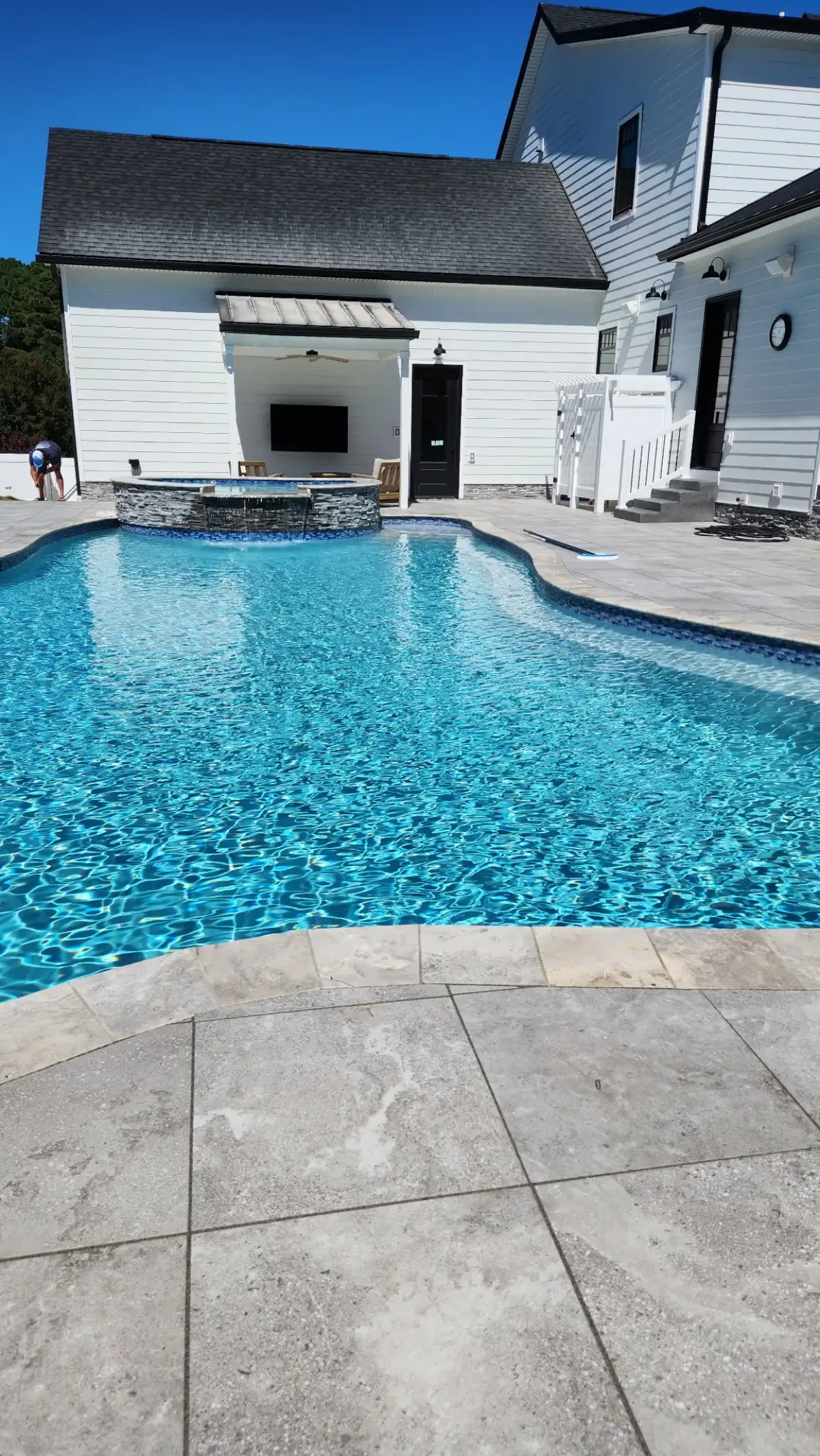
Finished inground pool with raised spa and coordinated paved surround

What to Ask Before Booking a Pool Installation in Lewes, DE

Use the first property conversation to replace broad assumptions with a clear, comparable pool proposal.

Lewes Pool Project Handbook · Chapter 10

This chapter focuses on the questions that turn an early pool conversation into a property-specific scope you can evaluate before booking.

Homeowners often begin with two questions: “What will an inground pool cost?” and “How soon can it be installed?” Both matter, but neither can be answered well until the pool, property, approvals, surrounding hardscape, and construction responsibilities are defined. A useful consultation should replace a broad idea with specific decisions you can see in a drawing or read in a proposal.

If you are considering custom pool installation in Lewes, Delaware, the questions below will help you prepare for that conversation. They reflect the issues homeowners are actively researching—cost, pool options, site preparation, permits, warranties, and long-term care—while accounting for coastal Sussex County conditions such as sandy soil, flat grades, drainage, storm exposure, and access between homes.

Before comparing prices, compare what each price buys.

A lower total may describe a smaller scope. Ask every builder to identify the same pool, equipment, utilities, patio, drainage, safety, approval, cleanup, and restoration responsibilities.

What do we need the pool and backyard to do?

Start with use, not a catalog. Decide whether the pool is primarily for family recreation, exercise, entertaining, quiet relaxation, or a combination. Note how many people will commonly use it, where supervision and seating should happen, whether shade matters, and how people should move between the house, pool, and the rest of the yard.

Those answers help shape dimensions, depth, steps or ledges, lighting, heating, cover choices, and the surrounding paver patio. Ask which pool systems and finish options the builder offers, why a particular option fits the property and intended use, and what maintenance or replacement needs differ among the choices. The recommendation should connect each option to a real priority, not just a feature list.

Is a $20,000 or $30,000 inground pool budget realistic?

Search results frequently surface those price points, but a number without scope can mislead. A custom inground pool project can include far more than the water-holding structure: design, excavation, hauling, plumbing, electrical work, equipment, coping, patio, drainage, safety barriers, approvals, startup, cleanup, and restoration may all affect the total. Access, soil conditions, grades, finish selections, utilities, and added outdoor features can change it further.

Instead of asking whether a price is possible in the abstract, ask what can be responsibly planned for your property and priorities. Request a written breakdown of included work, allowances, options, exclusions, and unknown conditions. If the project needs to change to meet a budget, ask which change affects the experience, appearance, maintenance, or surrounding space—and which work would still be required later.

What property facts must be confirmed before the price is firm?

A site visit should test the concept against the actual lot. Ask about equipment access, excavation access, staging and material delivery, utility locations, easements, setbacks, nearby structures, existing trees, grades, drainage paths, and space for the equipment pad and safety barrier. Bring a property survey or site plan if you have one, along with any community guidelines and information about known utilities or easements.

Lewes properties can vary widely, so the answer should distinguish verified conditions from assumptions. Ask which details can be checked during planning, which may remain unknown until excavation, and how a newly discovered condition would be documented, priced, and approved. That gives you a clearer way to evaluate risk before work begins.

How will drainage and finished elevations be planned?

The pool, coping, patio, walkways, equipment pad, and final grades all influence water movement. Ask where the top of the pool will sit relative to the home and yard, how the patio will pitch, where runoff will go after it leaves the hardscape, and how existing roof or yard drainage will interact with the finished area.

This is especially important on flat sites or where access and usable yard space are tight. “The patio drains away from the pool” is only part of an answer; water also needs a responsible path after it reaches the patio edge. If the plan calls for grade changes, retaining work, or additional drainage measures, those items should appear in the scope rather than becoming a surprise during construction.

Who handles permits, inspections, and community approval?

Requirements depend on the property and authority with jurisdiction. The project may involve building or trade permits, utility coordination, safety-barrier requirements, inspections, and HOA or community review. Ask who identifies each requirement, prepares drawings and submissions, pays the associated fees, schedules inspections, and handles requested revisions.

Also ask which selections must be final before applications or orders move forward. Moving the pool, changing equipment, adding a heater, revising the patio, or relocating a barrier can affect more than one part of the plan. Written responsibility and decision deadlines help keep those dependencies visible.

Does the proposal cover the complete construction scope?

Read the proposal line by line. It should identify the pool system and dimensions, excavation assumptions, hauling, plumbing, electrical coordination, equipment, coping, patio area, drainage, finishes, safety features, startup, cleanup, site restoration, payment terms, and the process for changes. Ask which selections are fixed, which are allowances, which are optional, and which are excluded.

Then test the amount of usable space around the pool. Put likely furniture sizes and walking routes onto the plan instead of accepting an arbitrary patio border. If the complete outdoor living space may include an outdoor kitchen, shower enclosure, landscape lighting, retaining wall, or future phase, ask whether utilities, elevations, and open areas can be coordinated now.

What timeline should we expect—and what could change it?

A single completion date hides the dependencies that control a pool project. Ask for a sequence that covers design decisions, approvals, site preparation, excavation, the pool structure, utilities, equipment, coping, patio and drainage work, safety barriers, inspections, startup, and final site work. Ask what must happen before each stage can begin.

Weather, approvals, material availability, inspections, site conditions, and homeowner changes can affect the schedule. A strong answer explains how the team communicates updates, who makes decisions, how long you have to approve selections or changes, and how different parts of the project are coordinated. Just Imagine manages larger outdoor builds in-house from excavation through finishing details, allowing the pool and surrounding work to be planned as one connected project.

What equipment, warranty, and ownership guidance are included?

Ask what pump, filter, sanitizer, controls, heater, lighting, and cover options are proposed; why they fit the pool; where the equipment will be located; and how it can be reached for service. Confirm which components are included in the base proposal and which are upgrades.

Warranty questions should be asked by component. The pool structure or liner, finish, equipment, coping, pavers, lights, and controls may have different terms, exclusions, maintenance requirements, and responsible parties. Before booking, ask what operating instruction, water-care guidance, documents, service contacts, and final walkthrough are included at handoff. Our guide to pool care and long-term ownership covers those decisions in more detail.

Lewes Pool Installation FAQ

What is the average cost of an inground pool installation in Delaware?

An online average cannot price a specific Lewes property reliably. Pool system, size, access, excavation, utilities, equipment, coping, patio area, drainage, safety barriers, permits, finish choices, and site restoration can all change the total. Compare written, property-specific scopes instead of relying on one statewide average.

Can I get an inground pool for $20,000 or $30,000?

A price target by itself does not show what the project includes. Ask a pool builder whether that budget is realistic for the property and requested scope, then confirm what is included or excluded for excavation, equipment, utilities, coping, patio, drainage, fencing, approvals, hauling, and restoration.

What should I bring to a pool consultation?

Bring a property survey or site plan if available, any HOA or community requirements, known utility or easement information, photos of access and drainage areas, and a list of how you want to use the pool. Also identify the patio, lighting, outdoor kitchen, shower, or other features you may want now or later.

What should a Lewes pool installation proposal include?

A proposal should identify the pool system and dimensions, site and excavation assumptions, equipment, utilities, coping, patio, drainage, safety features, finishes, permits or approvals, allowances, exclusions, payment terms, change procedures, warranties, startup, cleanup, restoration, and homeowner responsibilities.

How long does pool installation take in Lewes?

There is no reliable one-size-fits-all duration. Design decisions, approvals, site access, excavation, utilities, inspections, weather, materials, patio and drainage work, and requested outdoor features can affect the sequence. Ask for project milestones, dependencies, and communication expectations instead of only a completion date.

Bring your priorities to the property review

A productive first meeting should leave you with clearer next steps: what can fit, what still needs verification, which decisions affect cost, and what the written proposal will include. Just Imagine plans custom pools, hardscapes, and complete outdoor living environments together for larger residential projects across Sussex County.

Tell us about your Lewes pool project on the contact page or call (302) 402-3659. Share the property location, how you want to use the pool, your preferred timing, and the patio, lighting, kitchen, shower, or other features you want considered in the plan.

Request a Pool EstimateExplore Pool Installation

Plan Your Lewes Pool And Outdoor Space Together

Connect the pool, patio, access, drainage, equipment, lighting, and future features before construction decisions are locked in.